
TEXAS FUR
Remembering My Furrier Father
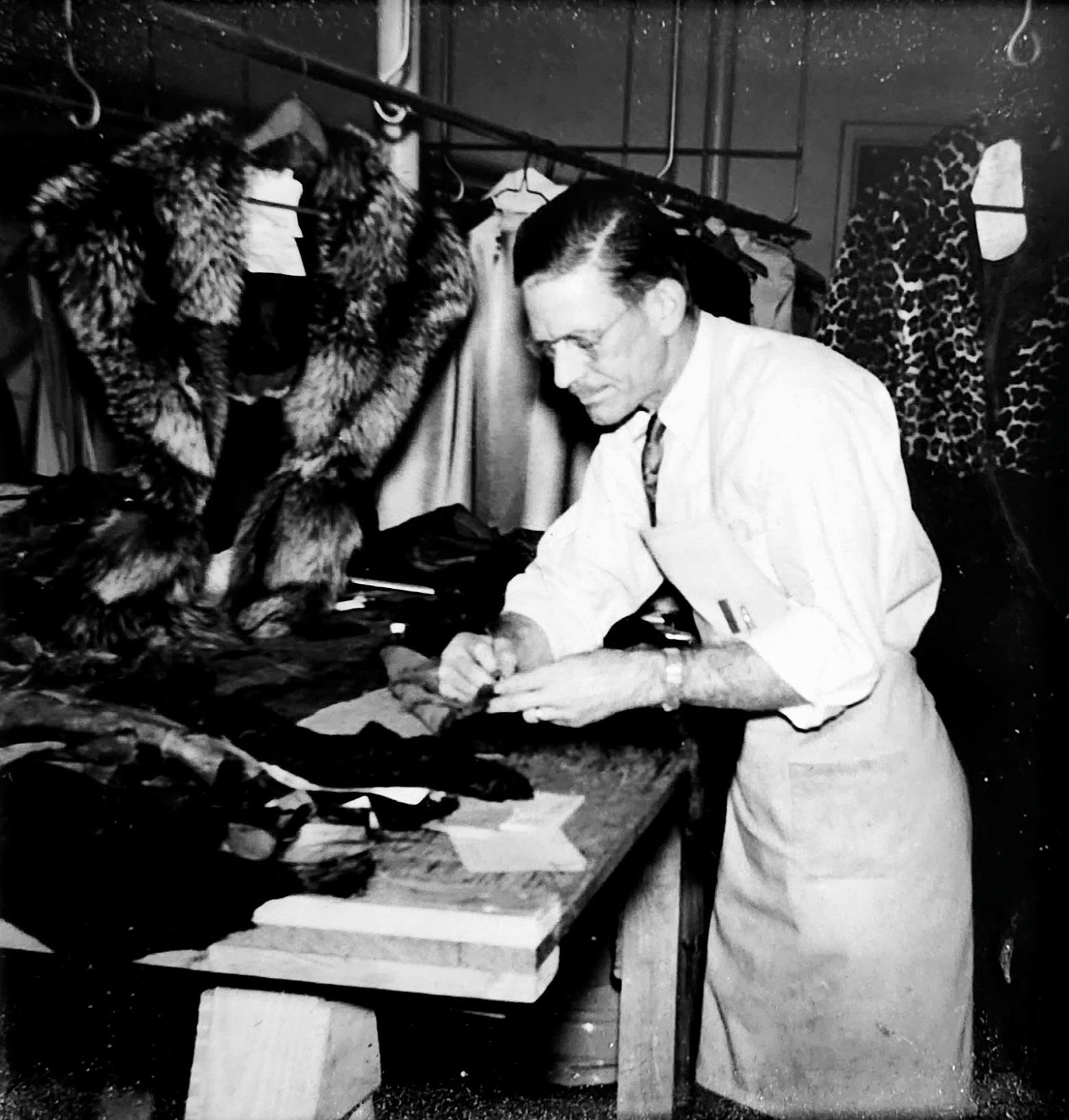
Regular readers of Recollections, Reflections, Fantasies, Fictions (regular RANDY READERS, as one of you has phrased it – thanks again Kathleen; I’m forever grateful), may have noted that I don’t often write about my father; and that even when I do, it’s sometimes in stormy contexts.
That’s mostly down to the drinking during my childhood. His drinking, I mean; mine didn’t come till later. When he was sober, he was loving, and a charmer. But too often back then he wasn’t sober, and, when not, he was neither loving nor charming.
But this piece is going to be different. This one will hardly touch on the drinking at all. This one is about one of the fascinating aspects of my father: it’s about My Father the Furrier.
To get it out of the way right up front, I am not now in favor of wearing fur, unless you are a fur-bearing animal and it’s your own fur. This will likely be the case with very few of my readers. (But if it does apply to you, Welcome! Glad to have you along.)
Seventy years ago, however, I grew up in a West Texas with different attitudes and sensibilities concerning fur. Not to excuse them, but they were different. And back then, my father was the only furrier between Dallas and Denver, as he took delight in saying, and I trust he knew.
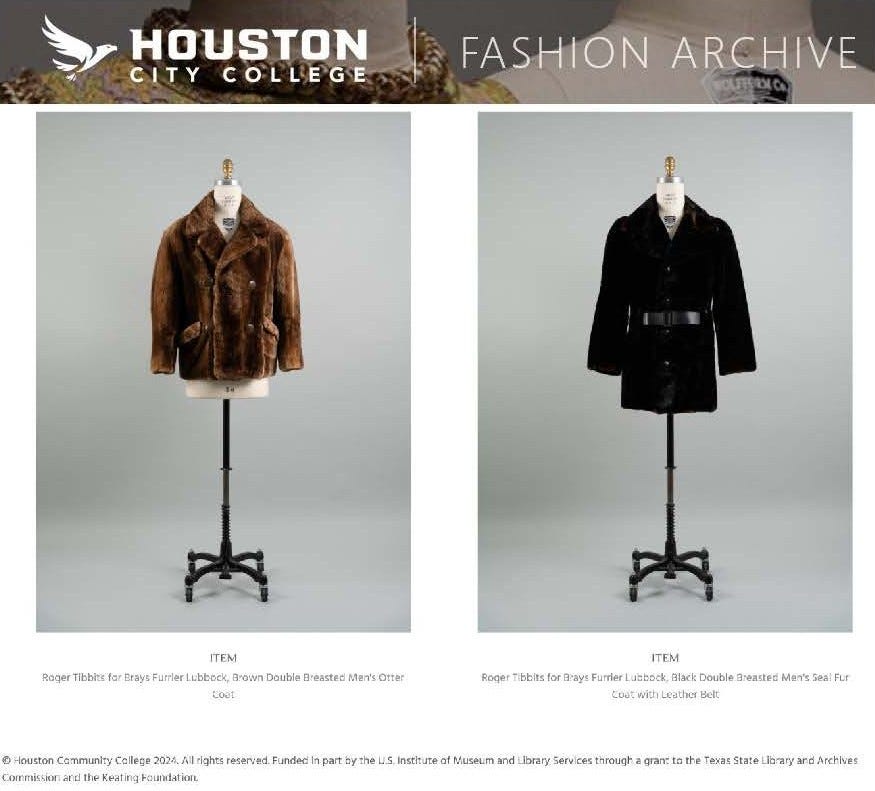
These fur coats, now part of the Texas Fur collection in the Fashion Archive at Houston City College, used to be mine, designed and made for me by my father, and finished – that’s the trade term for making the buttons and belts and linings that turn fur coats into wearable garments – by my mother. The description doesn’t mention her, but it should.
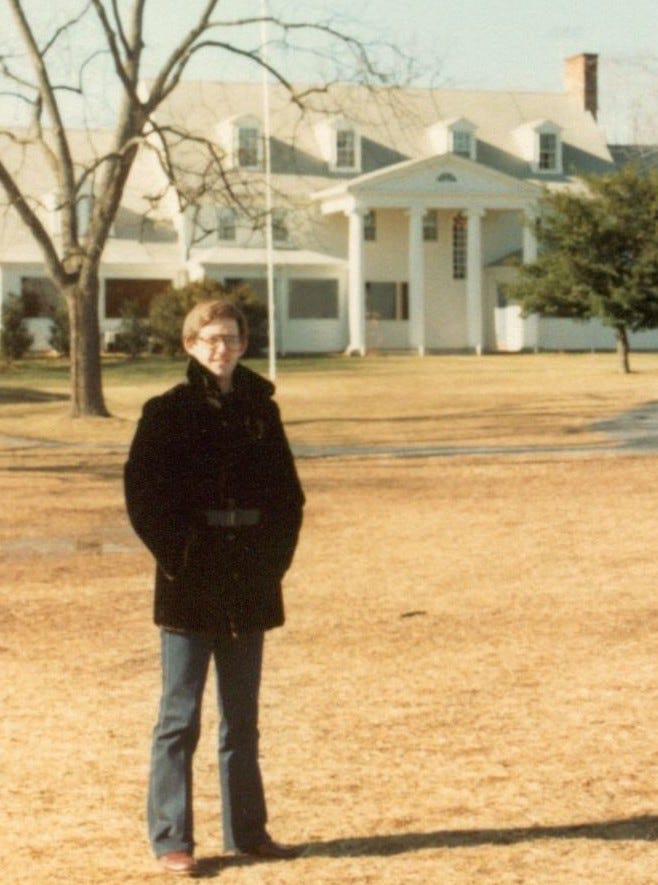
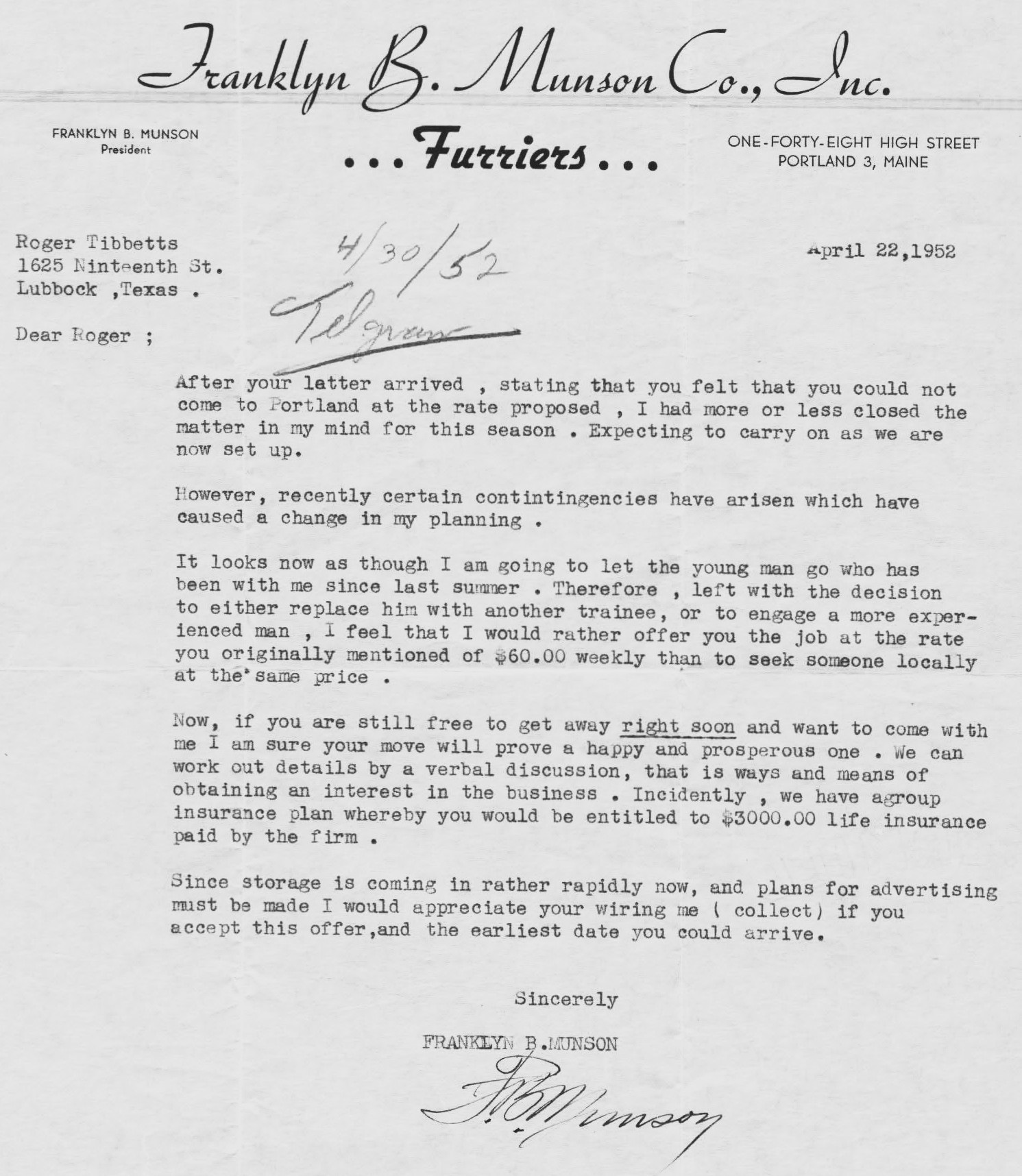
Father grew up in Portland, Maine (give or take a suburb), in the early 20th Century, a place where winters are long and cold, and the snow deep – a place where wearing fur makes as much sense as it ever does, for humans as well as furry friends. That’s where father learned his craft, by the apprentice system, and where he seemed to have had good prospects for a successful career, if a letter from his Portland employer is to be believed.
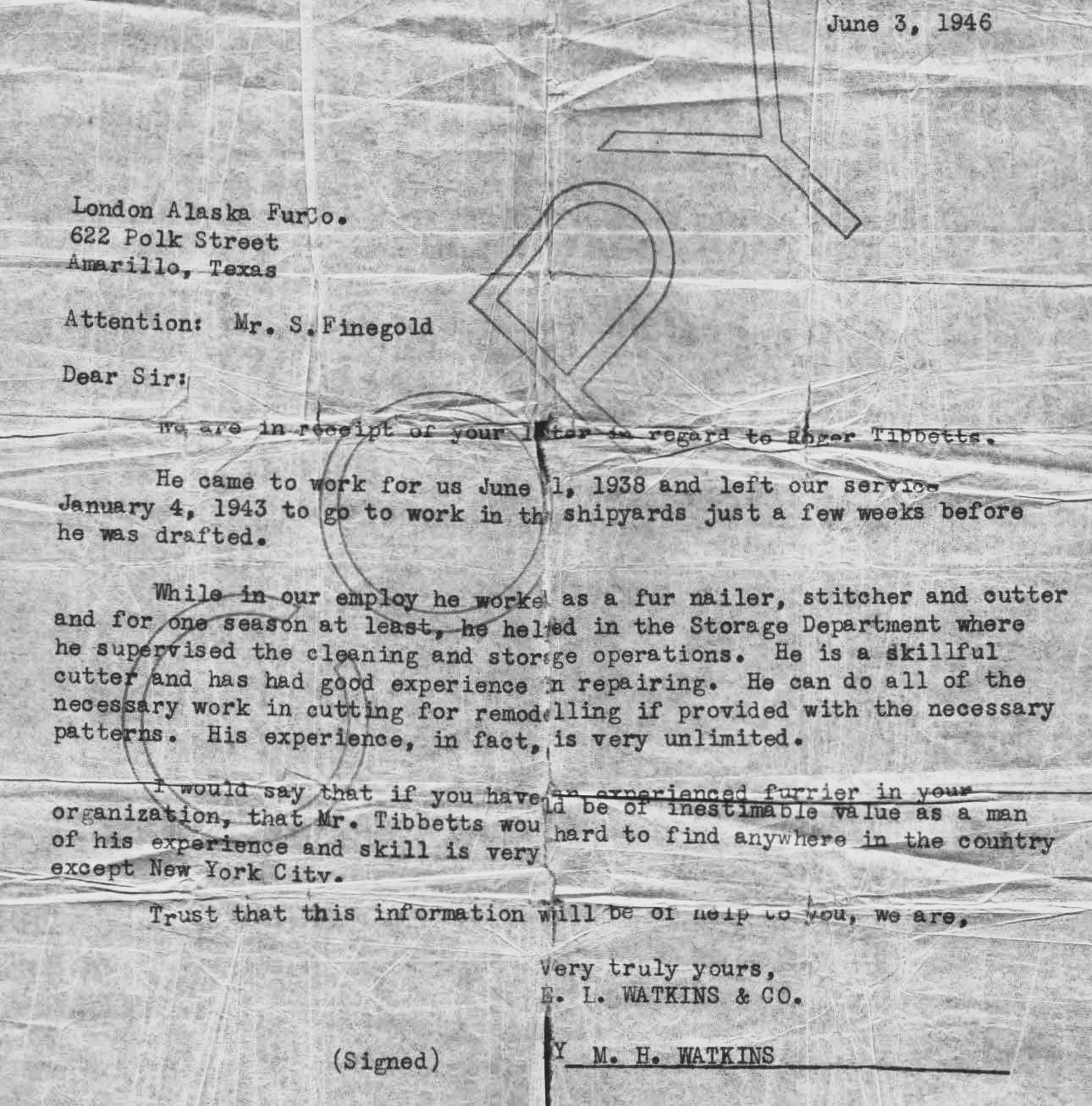
But then life, and World War II, happened. In 1943, he went to work in the Maine shipyards, followed by a stint in the United States Army, with time stationed in North Africa – which is where he took a bullet that, forty years later, finally killed him. He never talked about North Africa much, but he did scream about it sometimes in the night.
After a period of recovery in an Army hospital, he finished the War as cook in a camp for German Prisoners of War near McLean, Texas.
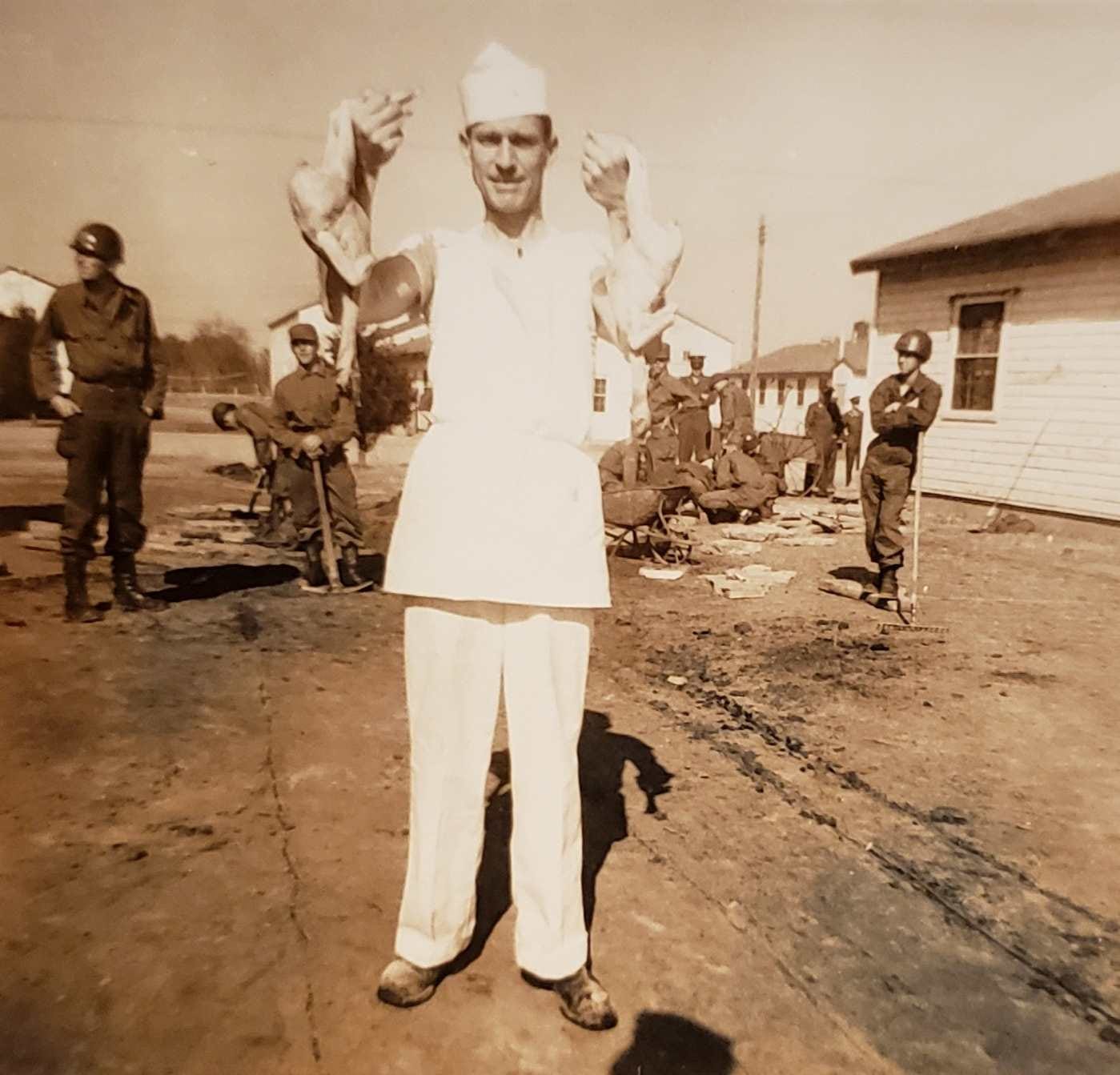
That’s where he met my mother, a youngish widow with an adolescent son from her first marriage. He worked that charm of his (or she of hers, though I think mostly his), and in no time they married, and he became a Texan. Mother’s folks had been in Texas since Mexico City was capital, so she saw no need to leave; and there were reasons why he might not want to rush back to Maine (but that’s another story).
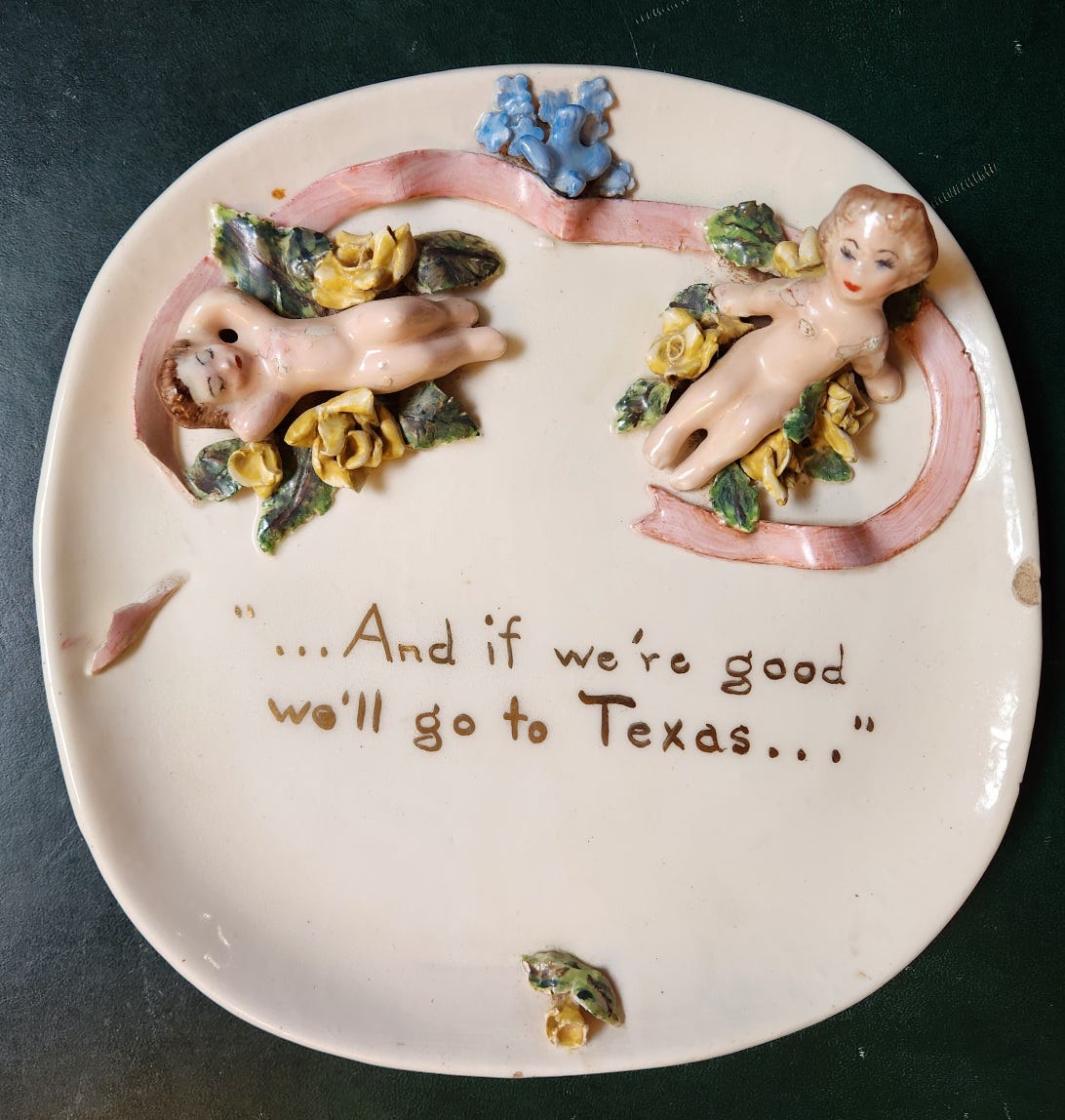
But even in Texas, a living had to be made. For a while he worked in a ceramic factory, where he made many delightful things, including, according to family lore, this plate, illustrating a sentiment that is beyond dispute: “… And if we’re good we’ll go to Texas.”
But fur work was what he knew, and after years of searching, he finally found his furrier spot in Lubbock in 1950; or rather, created his spot, since, as I mentioned earlier, until then there were no furriers between Dallas and Denver.
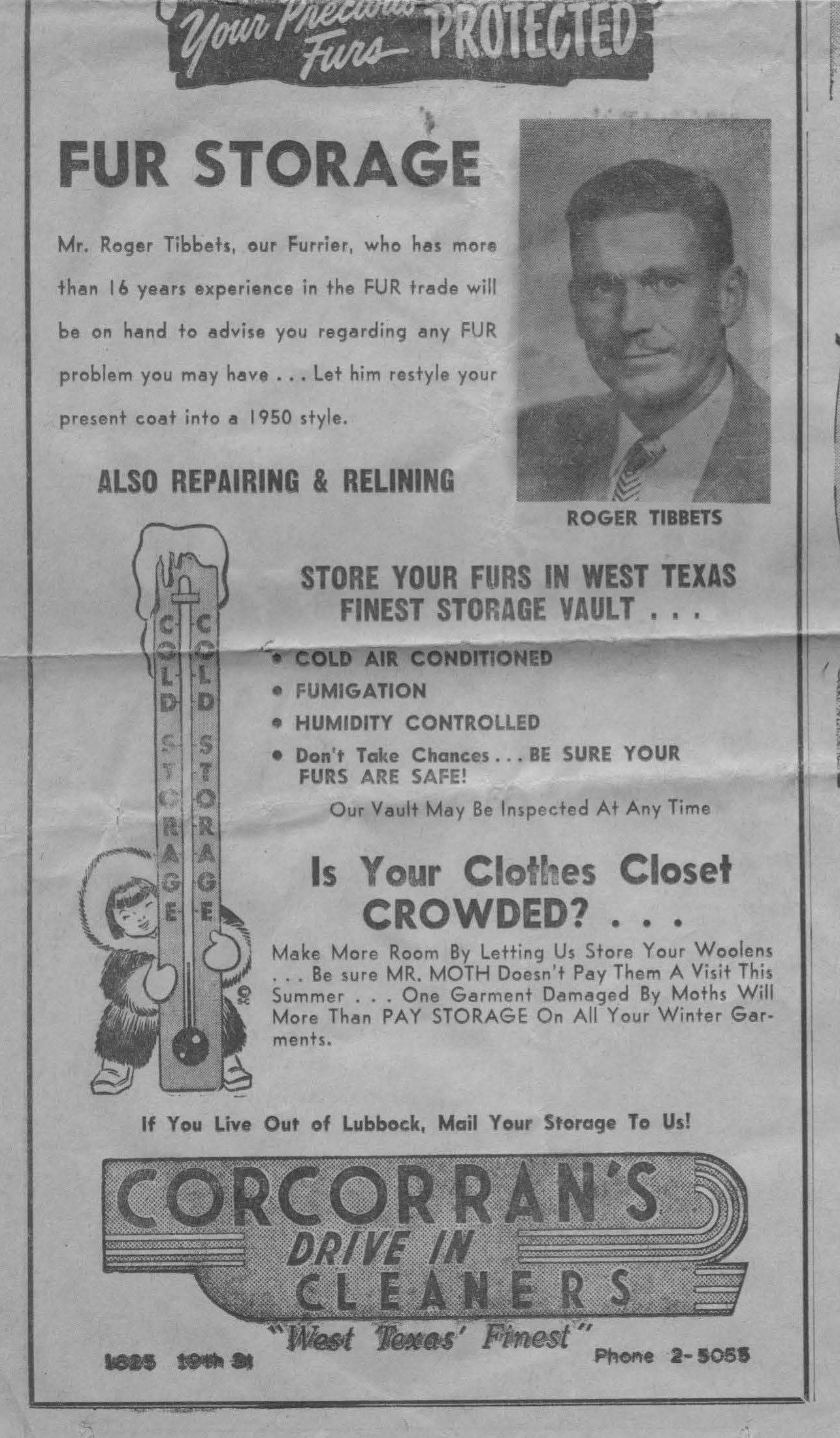
That’s a lot of territory, with a lot of cotton and wheat and oil and cattle money flowing through, especially in those booming post-war years; and with a touch of winter to justify furs (actually, quite a wallop of winter, some years, as I recall my soul-chilling early childhood shivers), which, combined with that new money, turned into a lot of mink, and other furs. I remember one customer – a rich Midland lady, I think she was – who had a mink in every shade, natural and not-so: black, brown, mahogany, tan, pink, blue, lavender, sapphire, pearl, white.
Oh, how I remember those early years, going into the shop with him and mother on evenings and Sunday afternoons in the busy season, when there weren’t enough hours in the weeks to do all the work that needed doing. I did my part for the effort by staying out of the way and listening to thrilling radio dramas – no Youtube, or even TV then. I still see the images in my head that those radio dialogues brought to life.
And I still remember the look of the shop, and the feel of it, and the cold of the cold-storage vault, and the smells – one smell, that of the cleaning fluid that, combined with the alcohol in Father’s veins, almost did him in, which I wrote about a while back in MY FATHER ALMOST DIED WHEN I WAS SEVEN.
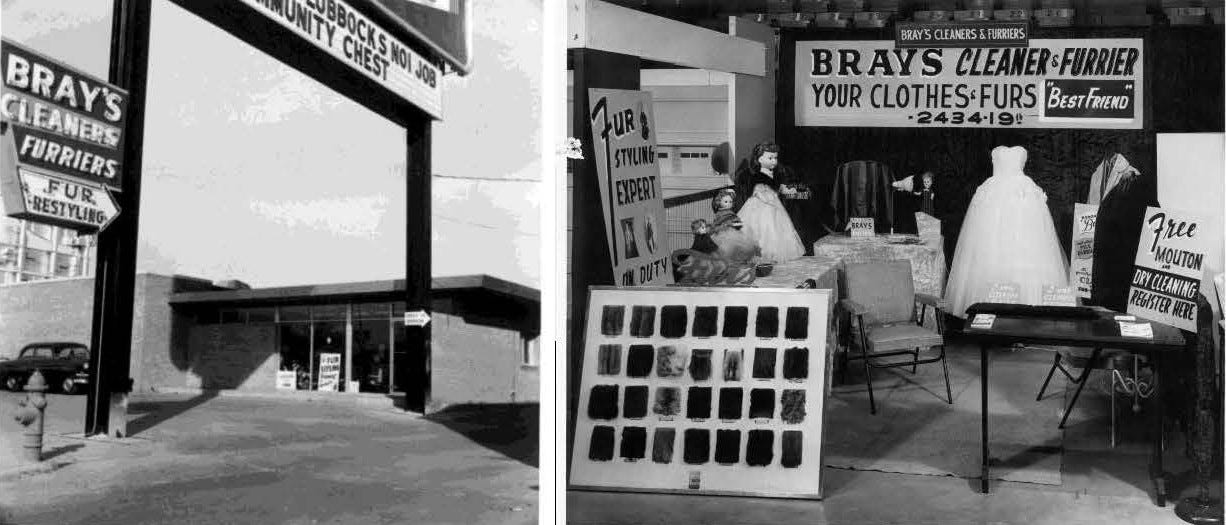
Moving on after a few years, he established another fur “salon” in a different Lubbock business, where he stayed until his death thirty years later. Note that even the dollies in Lubbock wore Tibbits originals back then.
I didn’t learn the business myself, though I sort of wish I had. Early on I seemed destined for other things – that is to say college, due largely to my mother’s dedication to schooling, though she had little of it herself.
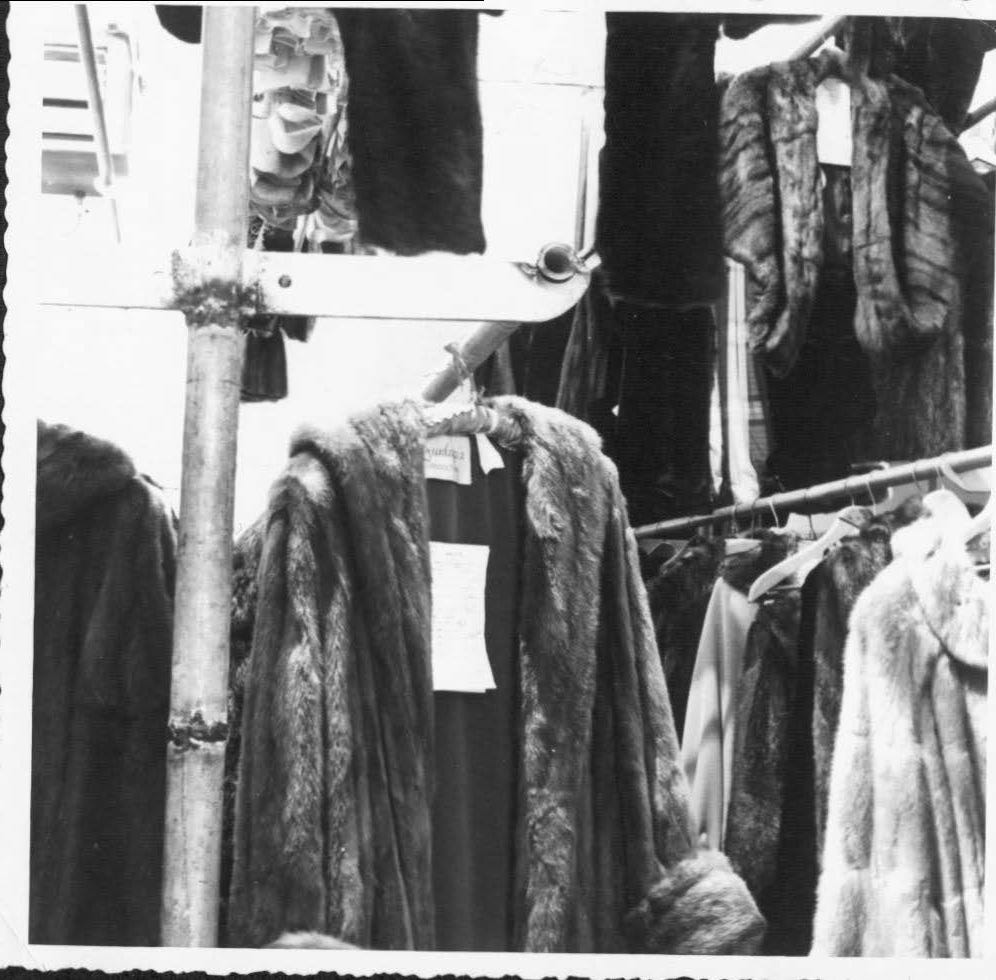
I suppose it’s just as well I didn’t become a furrier, considering the direction fur sensibilities have taken over the decades (including my own), though I suspect there are still plenty of pink minks out there, in rich folks’ closets, if one knows where to look, and chooses to.
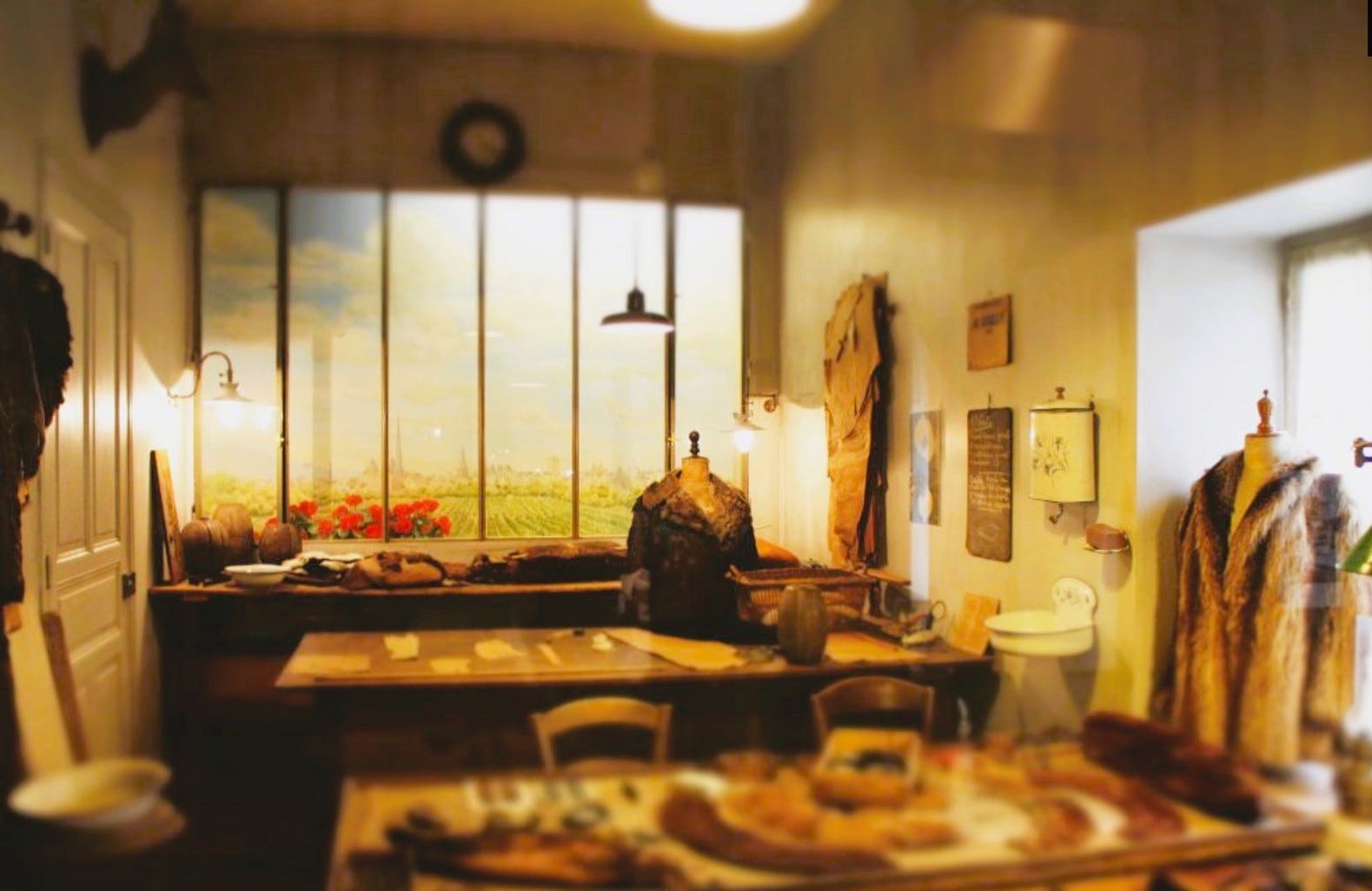
Still, there’s furrier in my fabric, which came out again decades later in, of all places, the Musée de la Vie Bourguignonne, in Dijon, France, where they’ve preserved a Dijon fur shop of the 1930s (that’s not even 20 years before my father’s Lubbock fur shop of the 1950s!).
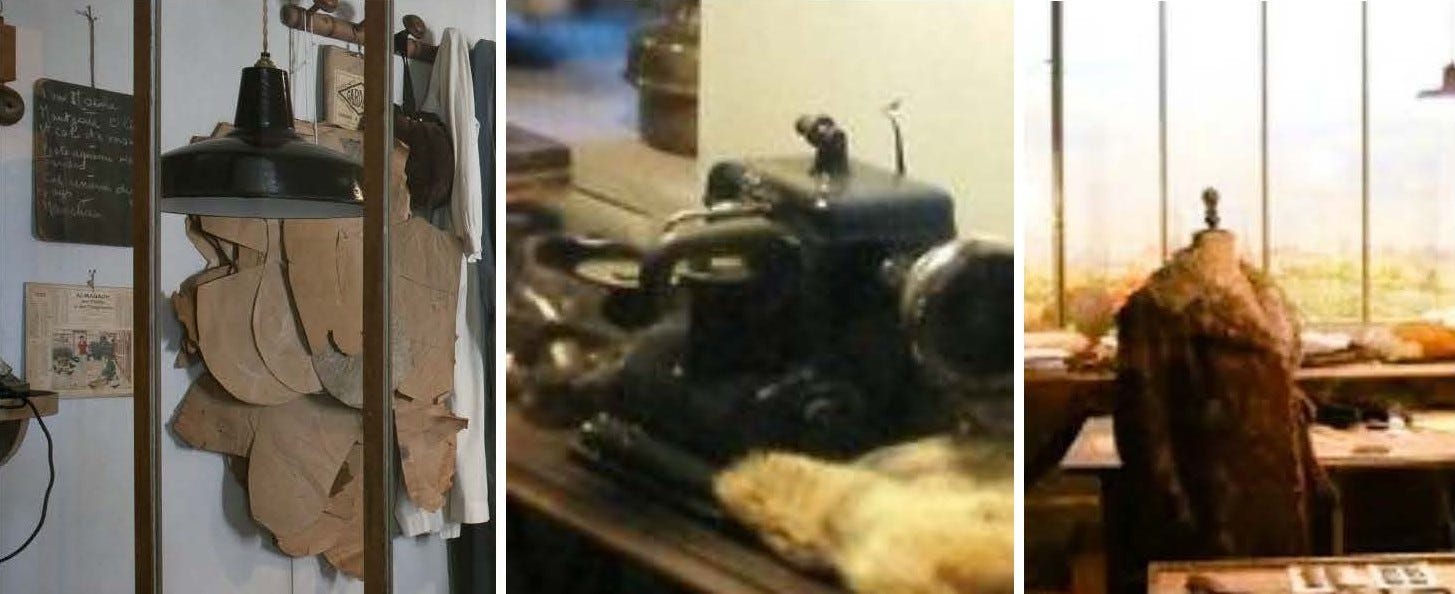
For me it was a flash back to my furrier childhood: I knew those brown paper patterns hanging on strings from the walls, the coats-in-progress on forms and tables, the special sewing machine, made just for fur.
Everything the same except the language. But not even that so different. Here’s a note on the origin of the word that I found on the web:
“The word furrier (a person who makes, repairs, or sells fur garments) comes from the Middle English word furrer. It originated from the Anglo-Norman furrere and the Old French forreor, which both stem from the Old French verb forrer (to line or trim with fur).”
Perhaps growing homesick for his own Maine origins, father sent out job-search letters to his Down East contacts in 1952. One even agreed to his salary request, $60 a week year round, and on top of it threw in health insurance. This was before he actually went back one March in the later 1950s, and returned with the exclamation, “It’s too damned cold up there!” So I came perilously close to being raised a Yankee child; could there have been anything worse for a Texas boy of five or six? Lucky for both of us, he came to his senses in time.
It’s to the credit of my husband, Rick, that these furs are now part of the HCC Fashion Archive. One Sunday morning he read an article about the Archive in the paper, and suggested that we might want to donate the furs, which, sadly, had shrunk in the Gulf Coast humidity (I’m guessing), and no longer quite made it all the way around my tummy.
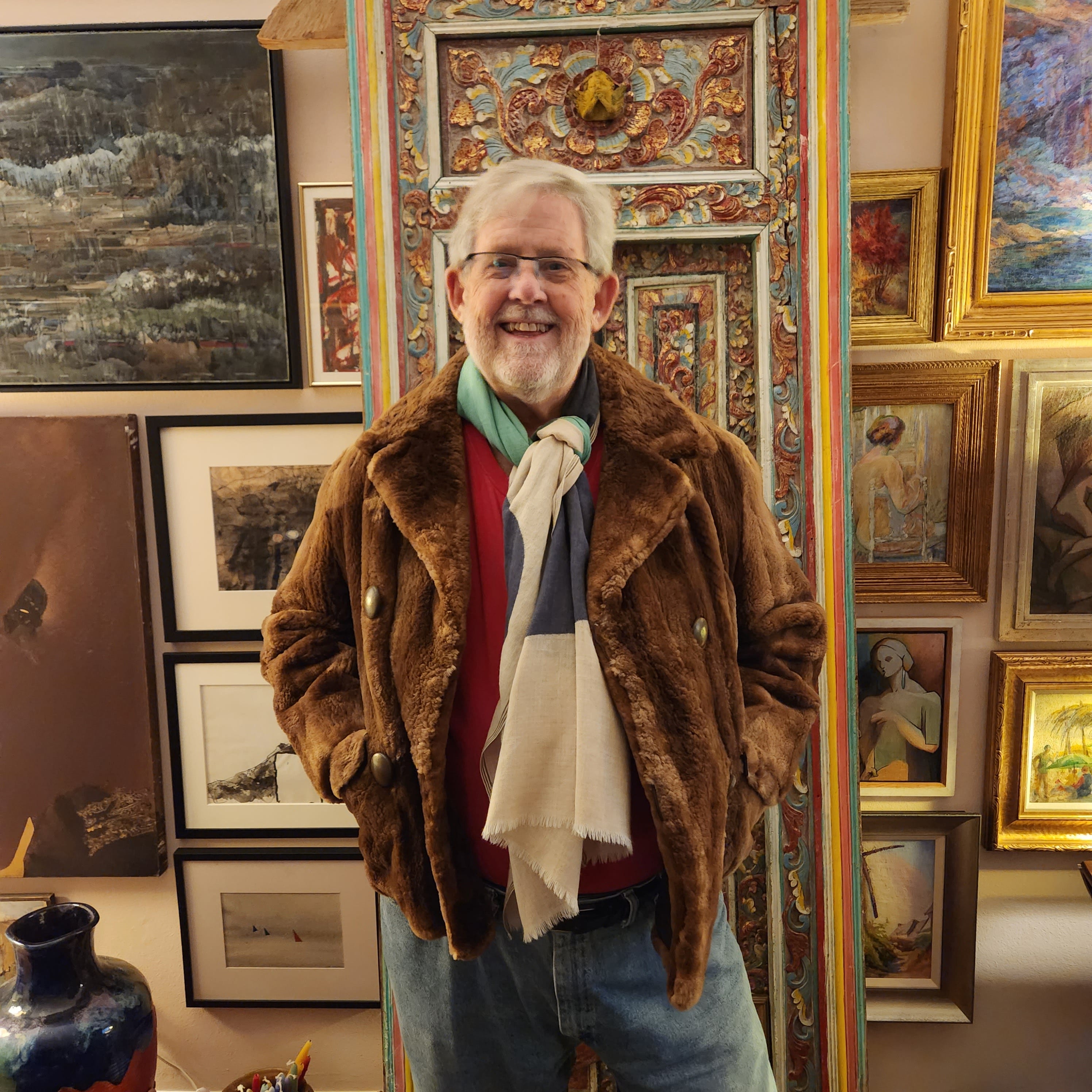
To Rick’s thoughtful suggestion, I replied, flatly, with my usual Pollyanna optimism, “They’ll NEVER want them.” As he has learned to do over decades, he persisted, and as it turned out, sure enough they did want them. Thanks Rick, and father, and mother, and HCC, for making these Tibbits originals part of the permanent record of Texas Fashion.
Love that kitschy plate! I remember in the 1980s when it would dip below 70° and the Texas ladies would pull out their minks.
Way back when in Amarillo my mother's big surprise Christmas gift bought at White & Kirk was a fur coat. Joy! Now I know where W&K found it, I bet.